The Four Knife Cuts That Will Change How You Cook
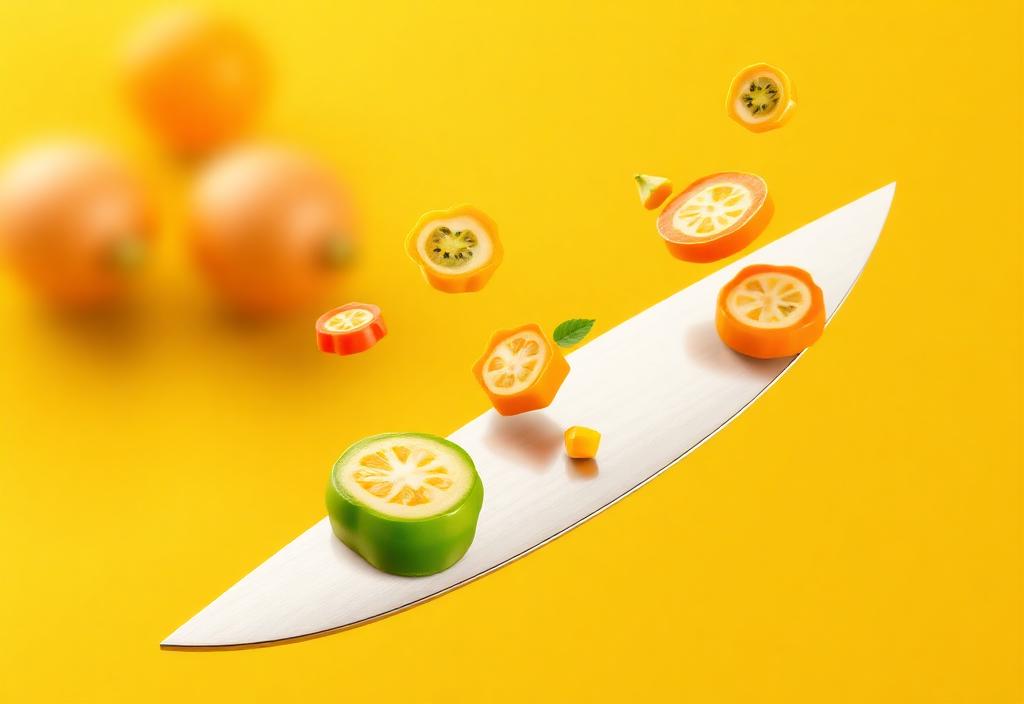
Home cooks obsess over ingredients and gadgets, but professional kitchens obsess over one thing: how food is cut. Uniform cuts don't just look better — they cook evenly, season evenly, and eat better. Learn these four and every recipe you already know gets an upgrade.
Fine dice (1/4 inch). The workhorse. Onions, carrots, celery for mirepoix. The trick: cut planks first, then batons, then rotate 90° and cut across. Keep your fingertips curled into a claw and let the flat of the blade guide against your knuckles.
Julienne (1/8 x 2 inches). Matchsticks for stir-fries, slaws, and garnishes. Square off the vegetable first — you can't cut uniform sticks from a rounded surface. Discipline here separates a rustic dish from a plated one.
Chiffonade. Stack basil or mint leaves, roll them tight like a cigar, and slice thin ribbons. Chiffonade releases aromatics without bruising, which is why bruised basil turns black on your pizza and properly chiffonaded basil stays vibrant green.
Brunoise (1/8 inch cube). Start from a julienne and cut across. This is the cut that separates cooks from chefs — a proper brunoise of shallot melts into a vinaigrette in a way a rough mince never will.
The knife matters less than you think. A sharp $40 chef's knife outperforms a dull $300 knife every time. Hone before every session, sharpen on a whetstone every month or two, and never put your knife in the dishwasher. That's the entire maintenance program.
Practice on cheap onions. A bag of yellow onions costs $3 and gives you 20 reps. Two weeks of daily practice and your prep time drops in half — permanently.